
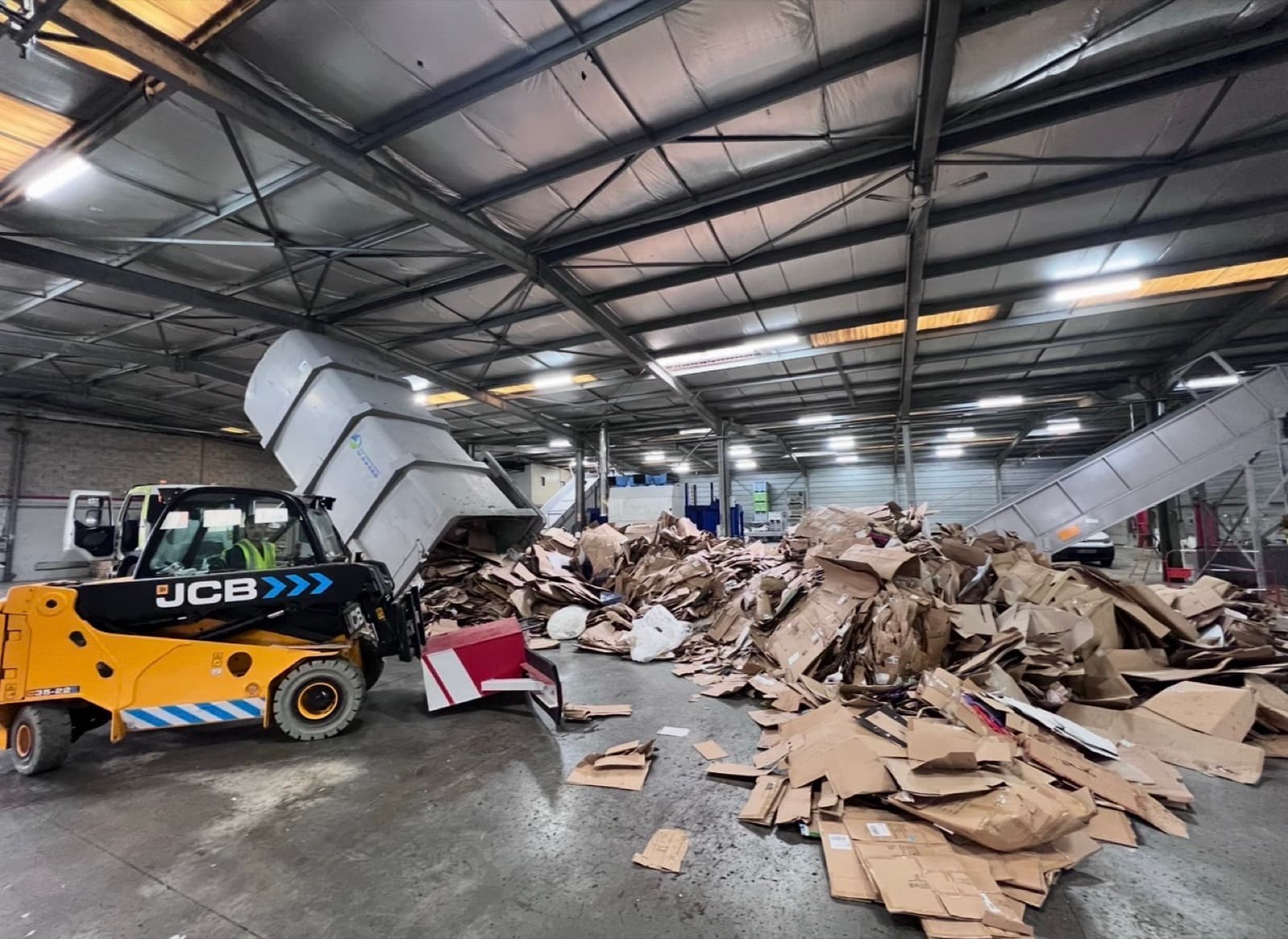
Tonnages, recovery rates, share of waste sent to landfill… The waste report your provider sends you is full of insight, provided you know how to read it. Here are the key indicators and how to use them in your CSR approach.
1. Tonnages per stream
This is the foundation: how many tonnes of each stream (cardboard, paper, plastic, wood, metal, glass, biowaste, mixed waste) were collected over the period. Compare them year on year and relate them to your activity (per employee, per meal served, per tonne produced) to track a real trend, independent of changes in activity.
2. Breakdown by treatment method
The French Environmental Code sets a waste hierarchy (article L541-1): prevention, preparation for reuse, recycling, other recovery (including energy recovery), then disposal. A good report shows, for each stream, the share sent to each of these methods.
- Material recovery: the material is recycled and becomes a resource again (cardboard, metals, sorted plastics…).
- Organic recovery: composting or anaerobic digestion of biowaste.
- Energy recovery: non-recyclable waste is used to produce energy.
- Disposal: landfill or incineration without recovery, to be kept to a minimum.
3. Sorting-at-source rate
It measures the share of your waste sorted where it is produced, before collection. The higher it is, the more material recovery is possible. A persistently high share of mixed waste often points to a lack of containers or instructions.
4. Traceability documents
Waste tracking slips, recovery certificates, waste register: these documents back up the figures in your report. They are essential in the event of an inspection and for any communication about your environmental performance.
How to use these figures
- Set a baseline year and quantified targets per stream.
- Share the results with your teams: sorting improves when everyone sees the effect of their actions.
- Include the indicators in your CSR report or, for companies in scope, in your sustainability report (CSRD, ESRS E5 standard on resource use and the circular economy).
- Only communicate figures you can back up: an environmental claim must be provable.
What SOVADIS offers
SOVADIS provides its clients with traceability and recovery indicators per stream, and helps them read them to steer their CSR / ESG approach.
Sources
- French Environmental Code, article L541-1 (waste hierarchy)
- Directive (EU) 2022/2464 on corporate sustainability reporting (CSRD) and ESRS E5 standard